
Organized jointly by the Departments of Tourism Management and Business Administration at Alanya University, we were highly honored to host Oliviero CARBONI from the University of Sassari on our campu...
Cirriculum and Course Contents for Students Enrolled in 2024
Course Plan and Course Descriptions
The semester-based course plan of the Tourism Management Undergraduate Programme, together with the course descriptions and learning outcomes of compulsory and elective courses, is presented below.
Course Plan
The course plan presents course codes and titles, weekly theoretical and practical hours, local credits and ECTS credits by academic year and semester.
| 1. YEAR | |||||
|---|---|---|---|---|---|
| 1. SEMESTER | |||||
| Course Code | Course Name | T | U | AC | ECTS |
| TRM 107 | Introduction to Tourism | 3 | 0 | 3 | 6 |
| TRM 101 | Introduction to Business | 3 | 0 | 3 | 5 |
| MAT 111 | Business Mathematics | 3 | 0 | 3 | 5 |
| GE 113 | Computer | 2 | 2 | 3 | 5 |
| ENG 111 | Academic English I | 2 | 0 | 2 | 2 |
| TKL 111 | Turkish Language I | 2 | 0 | 2 | 2 |
| YTO 111 | Turkish Language for Foreign Students I (Instead of TKL 111 Coded Course) | 2 | 0 | 2 | 2 |
| SEC 101 | Elective Course I (University Elective) | 3 | 0 | 3 | 5 |
| TOTAL | 19 | 30 | |||
| 2. SEMESTER | |||||
| TRM 114 | Tourism Management | 3 | 0 | 3 | 6 |
| TRM 128 | Marketing for Services Industry | 3 | 0 | 3 | 6 |
| TRM 106 | Tourism Geography | 3 | 0 | 3 | 6 |
| STAT 102 | Statistics | 2 | 0 | 2 | 3 |
| ENG 112 | Academic English II | 2 | 0 | 2 | 2 |
| TKL 112 | Turkish Language II | 2 | 0 | 2 | 2 |
| YTO 112 | Turkish Language for Foreign Students II (Instead of TKL 112 Coded Course) | 2 | 0 | 2 | 2 |
| SEC 101 | Elective Course II (University Elective) | 3 | 0 | 3 | 5 |
| TOTAL | 18 | 30 | |||
| 2. YEAR | |||||
|---|---|---|---|---|---|
| 1. SEMESTER | |||||
| Course Code | Course Name | T | U | AC | ECTS |
| TRM 221 | Microeconomics | 3 | 0 | 3 | 5 |
| TRM 227 | Hospitality Management | 3 | 0 | 3 | 5 |
| TRM 245 | Front Office Management and Automation | 1 | 2 | 3 | 3 |
| GE 211 | Social Responsibility and Ethics | 2 | 0 | 3 | 3 |
| HIST 211 | Principles of Ataturk and the History of Turkish Revolution I | 2 | 0 | 2 | 2 |
| YTT 211 | Principles of Ataturk and the History of Turkish Revolution for Foreign Students I (Instead of HIST 211 Coded Course) | 2 | 0 | 2 | 2 |
| SEC 201 | Elective Course III (University Elective) | 3 | 0 | 3 | 5 |
| SEC 203 | Elective Course IV (Departmental Elective) | 3 | 0 | 3 | 5 |
| TOTAL | 19 | 30 | |||
| 2. SEMESTER | |||||
| TRM 222 | Macroeconomics | 3 | 0 | 3 | 5 |
| TRM 238 | Travel Agency and Tour Operator Management | 3 | 0 | 3 | 5 |
| TRM 246 | Tourism Law, Regulations and Taxation | 2 | 0 | 2 | 3 |
| TRM 200 | Internship I | 0 | 0 | 0 | 5 |
| HIST 212 | Principles of Ataturk and the History of Turkish Revolution II | 2 | 0 | 2 | 2 |
| YTT 212 | Principles of Ataturk and the History of Turkish Revolution for Foreign Students II (Instead of HIST 212 Coded Course) | 2 | 0 | 2 | 2 |
| SEC 202 | Elective Course V (University Elective) | 3 | 0 | 3 | 5 |
| SEC 204 | Elective Course VI (Departmental Elective) | 3 | 0 | 3 | 5 |
| TOTAL | 16 | 30 | |||
| 3. YEAR | |||||
|---|---|---|---|---|---|
| 1. SEMESTER | |||||
| Course Code | Course Name | T | U | AC | ECTS |
| TRM 331 | Accounting | 3 | 0 | 3 | 5 |
| TRM 313 | Research Methods | 3 | 0 | 3 | 5 |
| TRM 319 | Tourism Economics | 3 | 0 | 3 | 5 |
| TRM 327 | Customer Relations Management | 3 | 0 | 3 | 5 |
| SEC 301 | Elective Course VII (University Elective) | 3 | 0 | 3 | 5 |
| SEC 303 | Elective Course VIII (Departmental Elective) | 3 | 0 | 3 | 5 |
| TOTAL | 18 | 30 | |||
| 2. SEMESTER | |||||
| TRM 332 | Cost Accounting* (Preq. TRM 331) | 3 | 0 | 3 | 5 |
| TRM 302 | Organizational Behaviour | 3 | 0 | 3 | 5 |
| TRM 318 | Tourism Management Models | 3 | 0 | 3 | 5 |
| TRM 300 | Internship II | 0 | 0 | 0 | 5 |
| SEC 302 | Elective Course IX (University Elective) | 3 | 0 | 3 | 5 |
| SEC 304 | Elective Course X (Departmental Elective) | 3 | 0 | 3 | 5 |
| TOTAL | 15 | 30 | |||
| 4. YEAR | |||||
|---|---|---|---|---|---|
| 1. SEMESTER | |||||
| Course Code | Course Name | T | U | AC | ECTS |
| TRM 411 | Sustainable Tourism | 3 | 0 | 3 | 5 |
| TRM 421 | Strategic Management | 3 | 0 | 3 | 5 |
| TRM 431 | Tourism Policy and Planning | 3 | 0 | 3 | 5 |
| SEC 401 | Elective Course XI (University Elective) | 3 | 0 | 3 | 5 |
| SEC 403 | Elective Course XII (Departmental Elective) | 3 | 0 | 3 | 5 |
| SEC 403 | Elective Course XIII (Departmental Elective) | 3 | 0 | 3 | 5 |
| TOTAL | 18 | 30 | |||
| 2. SEMESTER | |||||
| TRM 422 | Tourism Destination Planning, Development and Management | 3 | 0 | 3 | 6 |
| TRM 436 | Graduation Thesis | 5 | 4 | 7 | 9 |
| SEC 402 | Elective Course XIV (University Elective) | 3 | 0 | 3 | 5 |
| SEC 404 | Elective Course XV (Departmental Elective) | 3 | 0 | 3 | 5 |
| SEC 406 | Elective Course XVI (Departmental Elective) | 3 | 0 | 3 | 5 |
| TOTAL | 19 | 30 | |||
Course Descriptions
Course descriptions are organised in expandable sections by academic year and semester. Open the relevant year and semester to review the course content and learning outcomes.
Compulsory Courses
YEAR 1
SEMESTER 1
TRM 107 Introduction to Tourism
Course Content:
This course aims to provide students with a comprehensive perspective on the tourism sector by introducing its fundamental concepts, operations, and dynamics. The course examines in detail the historical development of tourism, different types of tourism, and the economic, social, and environmental impacts of the sector. Key components of the tourism industry, including accommodation businesses, travel agencies, airlines, cruise transportation, and tour operations, are explored in detail. The current state of tourism in Türkiye and around the world, regional and global trends, and potential areas of future development are analysed. The role of tourism in sustainable development and the protection of cultural heritage is also emphasized, and the effects of tourism policies at national and international levels are discussed. Students develop a holistic understanding of the tourism sector by supporting theoretical knowledge with real-life examples.
Learning Outcomes:
- Defines the fundamental concepts and operation of the tourism sector.
- Analyses the structure and importance of the tourism sector in Türkiye and around the world.
- Evaluates the economic, social, and environmental impacts of tourism.
TRM 101 Introduction to Business
Course Content:
This course aims to provide students with a comprehensive understanding of the business world by examining the fundamental concepts of business administration and the establishment, management, and organizational processes of businesses. The course covers key elements such as types of businesses, organizational structures, and internal business processes, while also focusing on the role of businesses within the economic system and strategies for creating competitive advantage. Core business functions such as marketing, finance, production, and human resources are analysed in detail. Entrepreneurship and innovation processes are also examined, with emphasis on successful entrepreneurial strategies and innovative business models. Ethical management is discussed in relation to sustainability and corporate social responsibility, helping students develop knowledge and skills for ethical decision-making. The course aims to help students apply theoretical knowledge in business management to practical situations.
Learning Outcomes:
- Explains business concepts and the fundamental functions of businesses.
- Evaluates the roles of businesses within the economic system.
- Discusses the principles of entrepreneurship and ethical management.
MAT 111 Business Mathematics
Course Content:
This course provides a comprehensive examination of mathematical methods used to solve a variety of problems encountered in business. It teaches how fundamental mathematical concepts such as linear equations, matrices, derivatives, and integrals can be applied to business problems. These mathematical tools provide powerful analytical methods that businesses can use in strategic decision-making. The course also includes applied mathematical analyses such as financial statement analysis, revenue and expense calculations, profit and loss calculations, and investment valuation. Students develop skills in business management and financial planning by using mathematical techniques to interpret financial data. The course aims to strengthen mathematical thinking in business decision-making and to provide students with an analytical approach.
Learning Outcomes:
- Applies mathematical methods to solve business and economics problems.
- Uses mathematical concepts to analyse financial data.
- Develops mathematical models for business decisions.
SEMESTER 2
TRM 114 Tourism Management
Course Content:
This course provides students with an understanding of management processes in tourism businesses by comprehensively examining management principles, strategic management approaches, and leadership skills in the tourism sector. It covers the organizational structures of tourism businesses, internal management processes, the setting of strategic objectives, and the functioning of decision-making mechanisms. Leadership approaches in tourism businesses, managerial decision-making skills, and team management are emphasized. Critical topics such as crisis management and change management are also addressed, including how tourism businesses can respond effectively to crisis situations. Within the framework of sustainable tourism management, the importance of developing strategies aligned with environmental, social, and economic sustainability principles is emphasized. Customer satisfaction and customer experience management are also important components of the course; students learn how to implement a customer-oriented approach and work on strategies for building customer loyalty. The course aims to help students understand management challenges in tourism businesses and develop strategic solutions to these challenges.
Learning Outcomes:
- Analyses management processes and organizational structures in the tourism sector.
- Explains sustainable tourism management and crisis management strategies.
- Applies management techniques aimed at increasing customer satisfaction.
TRM 128 Marketing for Services Industry
Course Content:
This course introduces the fundamental principles and practices of marketing strategies in the service sector and helps students understand the dynamics of services marketing. Core elements of services marketing, including product, price, promotion, and distribution strategies, are examined in detail. Students learn about the distinctive characteristics of services and how a customer-oriented approach can be integrated into marketing strategies. Important concepts such as customer behaviour, customer satisfaction, loyalty programmes, and customer relationship management are also discussed. The course covers digital marketing strategies in the tourism sector, the use of social media, online reservation systems, and e-marketing methods, enabling students to understand how marketing activities can be managed in digital environments. Branding processes, strategies for tourism businesses to gain competitive advantage, and practices related to building brand loyalty are also important parts of the course. The course aims to teach students the fundamental concepts and strategies of marketing in the service industry through practical applications.
Learning Outcomes:
- Defines marketing strategies and practices in the service sector.
- Analyses customer behaviour and loyalty programmes.
- Develops digital marketing and branding strategies.
TRM 106 Tourism Geography
Course Content:
This course examines the geographical characteristics of tourism destinations and their effects on tourism, introducing students to the fundamentals of destination management. Major tourism regions around the world, their natural and cultural assets, and their contributions to the tourism economy are examined in detail. Particular attention is also given to the tourism geography of Türkiye; destinations in different regions of Türkiye are introduced through their tourism potential, historical and cultural heritage, natural attractions, and climatic characteristics. The concept of destination management is discussed together with the planning, management, and marketing processes of tourism regions. Another important topic is the role of natural and cultural heritage in tourism; students learn the importance of protecting these assets and managing them in accordance with sustainable tourism principles. The course also examines how the sustainable development of destinations can be balanced from environmental, social, and economic perspectives. It aims to provide students with a comprehensive understanding of tourism destinations at both global and local levels.
Learning Outcomes:
- Identifies major tourism destinations in Türkiye and around the world.
- Analyses the geographical characteristics of tourism destinations and their effects on tourism.
- Develops strategies for the protection of natural and cultural heritage and for sustainable destination management.
YEAR 2
SEMESTER 1
TRM 221 Microeconomics
Course Content:
This course comprehensively analyses how economic decision-making processes are shaped at the individual level and how these processes affect the behaviour of businesses and consumers. Its main topics include consumer and producer behaviour, demand and supply analysis, market equilibrium, and price formation. Students learn how changes in market conditions affect consumer preferences and producers’ production decisions. The course also focuses on cost and production theories, examining the cost structures businesses face in their production processes and the effects of these structures on decision-making. Different market structures, such as perfect competition, monopoly, and oligopoly, and the functioning of price mechanisms in these markets are examined from a microeconomic perspective. Students learn the methods and theories used to analyse market structures and economic behaviour, developing a solid understanding of the foundations of microeconomics. The course is important for students seeking to understand the basic dynamics of the economy and analyse microeconomic decisions.
Learning Outcomes:
- Defines microeconomic concepts and fundamental principles.
- Analyses consumer and producer behaviour and explains decision-making processes.
- Evaluates the characteristics of different market structures.
TRM 227 Hospitality Management
Course Content:
This course examines the management processes of accommodation businesses in detail. It focuses on the general structure of the hospitality sector, the fundamental elements of hotel management, types of businesses, and sector dynamics. It also discusses improving service quality in accommodation businesses, ensuring customer satisfaction, and integrating these processes with revenue management. Operational processes in hotel businesses are covered, with emphasis on strategies and management techniques that improve efficiency in areas such as front office, housekeeping, and food and beverage services. Employee management, staff motivation, and the effective management of training processes are also important parts of the course. Students learn how daily operations are conducted in accommodation businesses, how service quality can be improved, and how revenue management strategies can be developed. The course aims to equip students with the skills required to become effective managers in the hospitality sector.
Learning Outcomes:
- Defines the fundamental functions and management processes of accommodation businesses.
- Develops management strategies focused on service quality and customer satisfaction.
- Analyses operational processes and revenue management in the hospitality sector.
TRM 245 Front Office Management and Automation
Course Content:
This course provides a comprehensive examination of front office operations in hotel businesses and the automation systems used in these operations. It covers the basic functions of the hotel front office, guest reception processes, reservation management, and daily operations such as check-in and check-out. Revenue control, customer relationship management, and the effects of these processes on hotel management are also addressed. The course teaches the effective use of front office automation systems and their integration into business processes. While learning the fundamental principles of front office management, students also explore technological developments that make contemporary front office operations more efficient. The course aims to prepare professionals who can take an effective role in front office management within the hospitality sector.
Learning Outcomes:
- Explains the fundamental processes and operation of hotel front office activities.
- Uses front office automation systems effectively.
- Develops front office management strategies aimed at increasing guest satisfaction.
SEMESTER 2
TRM 222 Macroeconomics
Course Content:
This course comprehensively examines the fundamental elements and overall functioning of the macroeconomic system. Major topics include national income accounting methods, theories of economic growth, unemployment rates, inflation, and monetary and fiscal policies. Students learn how economic policies are formulated and how these policies affect economic equilibrium. The global dynamics of macroeconomics are also addressed. The concepts of an open economy, balance of trade, international trade theories, and the effects of economic relations on national economies are discussed in detail. The course aims to develop students’ macroeconomic analysis skills and help them better understand the effects of economic events on the overall economy. It provides a broad perspective for understanding the economy and for interpreting the formulation and effects of economic policies.
Learning Outcomes:
- Explains macroeconomic concepts and key indicators.
- Analyses the relationships among economic growth, unemployment, and inflation.
- Evaluates the effects of monetary and fiscal policies on the economy.
TRM 238 Travel Agency and Tour Operator Management
Course Content:
This course comprehensively examines the management processes of travel agencies and tour operations. It begins with the types, organizational structures, and operations of travel agencies and tour operators. Important topics such as product development, pricing strategies, sales techniques, and marketing strategies are addressed. Customer relationship management, methods for ensuring customer satisfaction, and approaches used by travel agencies to improve service quality are also examined in detail. The course additionally covers crisis management, strategies for dealing with adverse situations encountered by travel agencies and tour operators, and related planning processes. Students develop the skills required to manage travel agency business processes and tour operator activities effectively. The course aims to prepare professionals for successful careers in the sector.
Learning Outcomes:
- Defines the concepts of travel agencies and tour operations and analyses their organizational structures.
- Develops strategies for the development and marketing of tourism products.
- Provides effective solutions in crisis management and customer relationship management.
TRM 246 Tourism Law, Regulations and Taxation
Course Content:
This course covers legal regulations, legislation, and taxation processes specific to the tourism sector. Its main areas of focus include the legal structures of tourism businesses, employment contracts, consumer rights, and national and international legal regulations applied in tourism. Students gain knowledge of the legal responsibilities of sector businesses, legal arrangements governing employment relationships, and employee rights. Tax regulations in the tourism sector, the financial obligations of businesses, types of taxes, and tax declaration processes are also examined in detail. The course aims to enable students to understand legal obligations in the sector, acquire knowledge of taxation regulations, and apply this knowledge in the management of tourism businesses. It provides an important foundation for developing legal and tax awareness within the sector.
Learning Outcomes:
- Explains the fundamental legal regulations and legislation relating to the tourism sector.
- Evaluates the legal and financial obligations of businesses.
- Develops the ability to protect consumer rights and act in accordance with legal procedures.
YEAR 3
SEMESTER 1
TRM 331 Accounting
Course Content:
This course covers the fundamental principles of accounting, its importance in business management, and its areas of application. It examines in detail the processes of recording, classifying, summarizing, and reporting financial transactions across all stages of the accounting cycle. Emphasis is placed on the preparation and analysis of financial statements, income and expense accounts, inventory valuation methods, and basic accounting recording techniques. Accounting practices specific to the tourism sector are also examined, with examples of how accounting records are maintained in businesses such as hotels, travel agencies, and restaurants. Students learn the theoretical foundations of accounting principles while developing the ability to apply this knowledge through practical examples. The course provides the foundation necessary to understand and analyse the basic components of financial management in tourism businesses.
Learning Outcomes:
- Explains accounting concepts and fundamental principles.
- Prepares and analyses financial statements.
- Applies accounting methods used in the tourism sector.
TRM 313 Research Methods
Course Content:
This course comprehensively addresses the theoretical and practical aspects of scientific research methods. It focuses on the fundamental stages of the research process, including problem definition, hypothesis development, research design, data collection techniques, and questionnaire and scale development. Qualitative and quantitative data analysis methods, statistical techniques, and the reporting of results are also examined in detail. Students develop the ability to conduct literature reviews, carry out research in accordance with academic ethical principles, and present findings effectively. Through tourism-related research projects and case studies, students are encouraged to apply theoretical knowledge in practice. By understanding the fundamental principles of research methods, students develop the competence to produce analytical solutions to problems encountered in academic studies and professional life.
Learning Outcomes:
- Defines the fundamental stages of the research process and principles of scientific ethics.
- Applies data collection and analysis methods.
- Designs and reports scientific research in the field of tourism.
TRM 319 Tourism Economics
Course Content:
This course comprehensively examines the economic dynamics and impacts of the tourism sector. It explores the role of tourism activities in economic growth, foreign exchange earnings, employment creation, and income distribution. Tourism demand and supply, price elasticities, seasonality, and the economic analysis of tourism investments are examined in detail. Within the framework of sustainable tourism economics, approaches to balancing environmental, social, and economic dimensions are also discussed. The effects of tourism on regional development and its contributions to the national economy are evaluated through case analyses and statistical methods. Students develop the competence to analyse the influence of the tourism sector on economic policies and strategic planning and to formulate solution proposals.
Learning Outcomes:
- Explains the fundamental concepts of tourism economics.
- Analyses the effects of the tourism sector on economic growth.
- Proposes policies for a sustainable tourism economy.
TRM 327 Customer Relations Management
Course Content:
This course comprehensively covers the fundamental concepts, principles, and strategies of customer relationship management (CRM). It examines methods for increasing customer satisfaction and loyalty, the design of loyalty programmes, and customer experience management. The importance of data-driven analysis in CRM practices is emphasized, with attention to customer segmentation, personalized services, and customer lifetime value. Current examples and case studies are also presented regarding tourism-specific CRM practices and the use of digital tools such as social media, customer analytics, and automation software. The course aims to help students develop a strategic perspective in customer relationship management and acquire practical skills relevant to sector applications.
Learning Outcomes:
- Defines the fundamental concepts and strategies of customer relationship management.
- Develops methods for increasing customer satisfaction.
- Integrates CRM practices supported by digital tools into the tourism sector.
SEMESTER 2
TRM 332 Cost Accounting
Course Content:
This course focuses on the accurate determination, classification, and effective management of costs in businesses. It examines in detail cost accounting systems, the identification of direct and indirect costs, methods used for cost allocation, and budgeting processes. Emphasis is placed on cost analyses, cost control mechanisms, and profitability management that support business decision-making processes. Tourism-specific cost accounting practices are also addressed through case analyses and applied studies on cost control in businesses such as hotels and restaurants. The course aims to develop students’ cost management and analysis skills while providing strategic knowledge to support the financial sustainability of businesses.
Learning Outcomes:
- Explains the fundamental concepts and operation of cost accounting.
- Conducts cost analyses and applies control processes in businesses.
- Develops budgeting and cost-control strategies for the tourism sector.
TRM 302 Organizational Behaviour
Course Content:
This course aims to develop an understanding of human behaviour in organizations and the factors affecting such behaviour, as well as how these can be managed effectively. It covers individual behaviour, attitudes and personality traits, group dynamics and intra-group relations, motivation theories, leadership approaches, organizational communication processes, conflict management, and organizational culture. Applied analyses and case studies are conducted using examples of organizational behaviour specific to tourism businesses. Students gain the theoretical knowledge and practical skills required to understand human behaviour and manage interactions within organizations. The course aims to strengthen leadership and communication skills necessary for developing an efficient, sustainable, and effective management approach in the tourism sector.
Learning Outcomes:
- Explains the fundamental concepts and theories of organizational behaviour.
- Applies strategies to increase employee motivation and performance.
- Develops effective solutions in leadership, communication, and conflict management.
TRM 318 Tourism Management Models
Course Content:
This course covers theoretical and applied models that support management processes in the tourism sector. It addresses strategic management approaches, destination management, quality management systems, sustainability principles, and crisis management. Management models successfully applied in tourism are analysed in terms of their contributions to the sector and practical applications. The adaptability of different management models to sectoral requirements and fundamental strategies for effective management are also discussed. The course aims to enhance students’ knowledge and skills in developing management approaches suitable for the dynamic structure of tourism businesses.
Learning Outcomes:
- Explains management models and strategies specific to the tourism sector.
- Develops practices for sustainable tourism management.
- Produces effective solutions in crisis management and strategic planning.
TRM 300 Internship II
Course Content:
This course aims to provide students with practical experience in the tourism sector. During the internship, students actively participate in different tourism businesses and have the opportunity to transform theoretical knowledge into practical skills. Competencies such as observing service processes, participating in operational workflows, managing customer relations, and problem solving are developed. The internship also aims to help students become more familiar with sector dynamics and expand their professional networks. The programme is designed to contribute to students’ preparation for professional life after graduation.
Learning Outcomes:
- Develops the ability to observe and evaluate operations and operational processes in the tourism sector.
- Develops practices aimed at improving customer relations and service quality.
- Demonstrates professional skills and behaviour consistent with work ethics.
YEAR 4
SEMESTER 1
TRM 411 Sustainable Tourism
Course Content:
This course examines in detail the implementation of sustainability principles in the tourism sector and the challenges encountered in this process. Environmental, economic, and social dimensions of sustainability are addressed from the perspectives of protecting natural resources, reducing the carbon footprint, contributing to the economic development of local communities, and preserving cultural heritage. The formulation and implementation of sustainable tourism policies and the transformation of the sector in line with these policies are discussed. Successful sustainable tourism practices, international standards, and certification systems are examined to provide students with knowledge of global approaches.
Learning Outcomes:
- Explains the concept and fundamental principles of sustainable tourism.
- Applies environmental, social, and economic sustainability strategies in the tourism sector.
- Provides recommendations for developing sustainable tourism policies.
TRM 421 Strategic Management
Course Content:
This course covers strategic management processes aimed at ensuring the long-term success of businesses. Strategic analysis, environmental assessment, competitive analysis, and internal business analysis are examined in detail. Strategy formulation, strategic decision-making processes, effective implementation of strategies, and performance evaluation methods are among the core topics of the course. Particular emphasis is placed on strategic management approaches for the tourism sector, methods of creating competitive advantage, and innovation-oriented strategies. Supported by case studies and sector examples, the course enables students to integrate theoretical knowledge with practice.
Learning Outcomes:
- Analyses the fundamental stages of the strategic management process.
- Develops strategies that provide businesses with competitive advantage.
- Makes strategic decisions and prepares implementation plans in the tourism sector.
TRM 431 Tourism Policy and Planning
Course Content:
This course focuses on policy and planning processes that support the development of the tourism sector. It addresses the formulation of tourism policies, national and international planning approaches, destination management, and the economic, social, and environmental impacts of tourism. Public-private sector cooperation in tourism is also examined.
Learning Outcomes:
- Explains the fundamental dynamics involved in the formulation of tourism policies.
- Analyses destination management and planning processes.
- Evaluates the economic and environmental impacts of tourism and proposes solutions.
SEMESTER 2
TRM 422 Tourism Destination Planning, Development and Management
Course Content:
This course addresses policy and planning processes that support the development of the tourism sector. The formulation of tourism policies, planning approaches at national and international levels, destination management, and the economic, social, and environmental impacts of tourism are examined in detail. Public-private sector cooperation in tourism is also evaluated as an important instrument for sector sustainability. The course aims to equip students with the skills to develop effective tourism policies and undertake strategic planning. Through case analyses and projects, students have the opportunity to apply theoretical knowledge in practice.
Learning Outcomes:
- Analyses destination planning and management processes.
- Develops innovative and sustainable strategies for the development of tourism destinations.
- Evaluates the operation of destination management organizations and international examples.
TRM 436 Graduation Thesis
Course Content:
This course aims to enable students to conduct academic research on a specific topic in tourism or related fields. Throughout the course, students develop important skills such as selecting a research topic, conducting a literature review, collecting and analysing data, reporting, and presentation techniques. Students prepare a scientific thesis on their chosen topic and present their research in accordance with academic ethical principles. The course enables students to apply theoretical knowledge in practice and gain a comprehensive understanding of the scientific research process. Guidance and support are also provided regarding challenges encountered during the thesis-writing process and possible solutions.
Learning Outcomes:
- Conducts a comprehensive literature review on a specific research topic.
- Develops skills in data collection, analysis, and scientific report writing.
- Presents and discusses research findings in accordance with academic ethical principles.
Elective Courses
Modern Languages
| Course Code | Course Name | Prerequisite | T | U | AC | ECTS |
|---|---|---|---|---|---|---|
| ENG 211 | Academic English III | - | 2 | 2 | 4 | 5 |
| ENG 212 | Academic English IV | - | 2 | 2 | 4 | 5 |
| GER 101 | German I | - | 3 | 0 | 3 | 5 |
| GER 102 | German II | - | 3 | 0 | 3 | 5 |
| GER 201 | German III | - | 3 | 0 | 3 | 5 |
| GER 202 | German IV | - | 3 | 0 | 3 | 5 |
| GER 301 | German V | - | 3 | 0 | 3 | 5 |
| GER 302 | German VI | - | 3 | 0 | 3 | 5 |
| FRC 101 | French I | - | 3 | 0 | 3 | 5 |
| FRC 102 | French II | - | 3 | 0 | 3 | 5 |
| RUS 101 | Russian I | - | 3 | 0 | 3 | 5 |
| RUS 102 | Russian II | - | 3 | 0 | 3 | 5 |
Departmental Elective Courses
YEAR 2
SEMESTER 1
TRM 261 Psychological Approaches to Travel and Tourism
Course Content:
This course aims to examine the psychological dimensions of the travel and tourism industry. Students learn to analyse tourist behaviour at individual and societal levels in order to understand psychological processes in tourism. The psychological effects of travel on people, tourists’ motivations for holidays and travel, decision-making processes, and the emotional effects of travel constitute the main topics of the course. The course considers how travel influences various psychological factors such as identity construction, the search for emotional satisfaction, cultural interactions, and social change. In addressing these questions, students acquire both theoretical and practical knowledge and conduct more in-depth analyses by adapting psychological theories to the tourism sector. In addition to understanding tourists’ behavioural tendencies, the course examines how psychological factors can influence tourism policies and strategies.
Learning Outcomes:
- Analyses the psychological foundations of travel and tourists’ motivations from a theoretical perspective.
- Understands psychological factors influencing travel decisions and develops the ability to adapt them to tourism strategies.
- Analyses tourists’ emotional and psychological needs during travel and develops effective marketing strategies for destinations.
TRM 263 Travel and Tourism in History and Culture
Course Content:
This course examines the historical origins of travel and its development within cultural contexts, addressing tourism from a historical perspective. By tracing the earliest forms of travel from antiquity to the present, students examine in depth the effects of cultural and social interactions on tourism. The course considers how the culture of travel that began in ancient times evolved through the Middle Ages to the present day, as well as the cultural, economic, and social dimensions of travel. The historical foundations of modern tourism, historical events that played important roles in the development of tourism, and the socio-cultural effects of major travel routes are among the main areas of focus. Students gain a better understanding of how travel has evolved over time, how it has shaped social structures, and the historical influences underlying modern tourism.
Learning Outcomes:
- Analyses the historical development of travel and evaluates its cultural impacts.
- Discusses the historical origins of modern tourism and the effects of major tourism movements of the past on the present.
- Analyses the effects of cultural interaction on tourism and develops a deeper understanding of its social and cultural dimensions.
TRM 265 Sociology of Tourism
Course Content:
This course offers a sociological perspective on the effects of tourism on social structures and dynamics. The relationship between travel and tourism and social structures, the ways these dynamics shape the tourism industry, and processes of change within societies constitute the main topics of the course. Students examine how tourism transforms society through its economic, cultural, and social dimensions, the interactions between tourists and host communities, and the ways tourism strengthens connections between societies. The relationship between cultural tourism and tourist behaviour is also discussed within a sociological framework, with attention to the influence of social values on tourism. The course provides a comprehensive perspective for students seeking to understand the effects of tourism on social change.
Learning Outcomes:
- Analyses the effects of tourism on social structures using sociological theories.
- Examines the relationship between cultural tourism and social values and evaluates tourist behaviour from a sociological perspective.
- Discusses the effects of tourism on social change and understands the role of social structures in the tourism industry.
TRM 267 Tourism and Leisure Management
Course Content:
This course comprehensively covers the fundamental concepts and practices related to the management of tourism and leisure sectors. It focuses on modern strategies and methods used in the planning, management, and evaluation of leisure activities. Emerging trends in tourism and leisure, consumer behaviour, service quality, destination management, and innovative business models form the main topics of the course. The importance of sustainable management practices in the sector and their social, economic, and environmental impacts are also analysed. Students learn tourism and leisure management processes from both theoretical and practical perspectives and develop the ability to create innovative management techniques for the sector.
Learning Outcomes:
- Analyses management processes in tourism and leisure sectors and develops appropriate strategies.
- Evaluates sustainable management approaches and proposes innovative solutions that consider environmental and social impacts.
- Evaluates consumer trends in the leisure sector and applies methods aimed at improving service quality.
TRM 269 Project Management in Tourism
Course Content:
This course covers the planning, implementation, and evaluation processes of projects in the tourism sector. Project management concepts, methods, and tools are adapted to the specific conditions of tourism. The course includes fundamental topics such as project planning, budget management, scheduling, risk analysis, and stakeholder management. It also examines challenges encountered in tourism projects and strategies used to overcome them. In the applied component of the course, real-life projects are analysed to develop students’ project management skills. The course aims to provide the leadership, organizational, and problem-solving abilities required to achieve successful outcomes in tourism projects.
Learning Outcomes:
- Analyses the planning, implementation, and evaluation processes of tourism projects and develops management skills.
- Adapts project management tools and techniques to the tourism sector to produce effective solutions.
- Evaluates project risks, develops effective strategies, and successfully manages stakeholder relations.
TRM 271 Management and Organization
Course Content:
This course comprehensively addresses the concepts of management and organization and aims to analyse effective management processes in the business world. It covers fundamental management topics such as organizational structures, leadership, decision-making processes, motivation theories, and change management. Internal organizational dynamics, communication processes, and the effects of teamwork on organizational performance are examined in detail. In a globalizing business environment, the development of innovative management approaches and strategic thinking skills is also an important component of the course. Through applied examples of different management theories, students develop the ability to generate solutions to complex management problems they may encounter in professional life.
Learning Outcomes:
- Analyses management and organization theories and develops strategies appropriate to business applications.
- Evaluates leadership, decision-making, and motivation processes from a management perspective.
- Effectively analyses organizational structures and dynamics and applies innovative management approaches.
SEMESTER 2
TRM 280 Consumer Behaviour in Tourism
Course Content:
This course provides the theoretical and applied knowledge required to understand and analyse consumer behaviour in the tourism sector. Psychological, social, cultural, and economic dimensions of consumer behaviour are addressed. Travel motivations, decision-making processes, perceptions, attitudes, and the formation of behaviour are examined in detail. The course also focuses on analysing consumer segments in tourism and on customer satisfaction and loyalty strategies. Case studies and examples are used to provide students with a sectoral perspective for understanding consumer behaviour.
Learning Outcomes:
- Analyses and evaluates factors affecting consumer behaviour in the tourism sector.
- Develops effective marketing strategies based on consumer motivations and decision-making processes.
- Analyses consumer segmentation and proposes strategic solutions to increase customer satisfaction.
TRM 282 Readings in Tourism Theory
Course Content:
This course comprehensively examines fundamental theories and academic studies in the field of tourism. Students analyse the historical development of tourism theory, contemporary approaches, and interdisciplinary perspectives. The theoretical foundations of topics such as sustainability in tourism, globalization, preservation of local cultures, and social change are examined in detail. The course includes readings of academic articles, group discussions, and critical analysis activities aimed at understanding tourism theories. By relating these theories to current developments in the tourism sector, students develop the ability to transform theoretical knowledge into practice.
Learning Outcomes:
- Analyses the fundamental concepts and historical development of tourism theories.
- Critically evaluates academic articles and develops the ability to apply theoretical knowledge in practice.
- Relates tourism theories to current sector issues and develops strategic recommendations.
TRM 284 Leisure, Culture and Society
Course Content:
This course aims to examine the cultural and social dimensions of leisure and entertainment. The effects of leisure activities on individual and social life are addressed from sociological and cultural perspectives. The influence of cultural values, social interaction, and technology on leisure is analysed. The course covers the historical development of leisure and free-time activities, cross-cultural differences, and their transformative effects on society. Students conduct case studies and field research to understand the relationship between leisure and culture.
Learning Outcomes:
- Develops an academic perspective by analysing the cultural and social dimensions of leisure.
- Evaluates the effects of leisure on society and culture and proposes innovative approaches in this context.
- Interprets leisure and free-time activities within the framework of cultural differences.
TRM 286 Housekeeping Management
Course Content:
This course examines housekeeping management processes in the hospitality sector in detail. It covers the planning and implementation of cleaning, order, staff management, maintenance, and operational activities. Emphasis is also placed on maintaining quality standards, increasing customer satisfaction, and coordinating processes within the housekeeping department. The course provides information on modern housekeeping techniques, tools, and technological innovations. Students learn the fundamental elements of housekeeping management in the context of hotel operations and develop practice-oriented skills.
Learning Outcomes:
- Analyses hotel housekeeping management processes and develops strategies to improve operational efficiency.
- Applies quality standards in the housekeeping department to increase customer satisfaction.
- Evaluates technological innovations in housekeeping management and proposes effective solutions.
YEAR 3
SEMESTER 1
TRM 373 Aviation Management
Course Content:
This course comprehensively addresses management processes and operational elements in the aviation sector. Fundamental concepts of aviation management, airline businesses, airport management, international regulations, safety, and sustainability are examined. The course also focuses on customer service management, crisis management, air traffic control, and financial planning in aviation. Theoretical knowledge is supported by practice-oriented projects and case analyses.
Learning Outcomes:
- Analyses management processes and operational elements in the aviation sector.
- Develops effective strategies for airport and airline management.
- Proposes solutions related to sustainability and safety in the aviation sector.
TRM 375 Tourism Advertising
Course Content:
This course comprehensively addresses advertising and marketing strategies in the tourism sector. It focuses on planning advertising campaigns, developing media strategies, target audience analysis, and creative advertising design. The course examines digital advertising, social media campaigns, and contemporary advertising techniques used to promote tourism destinations. Successful tourism advertising campaigns are also analysed and critically evaluated.
Learning Outcomes:
- Explains fundamental concepts related to tourism advertising and marketing strategies.
- Develops effective media and target-audience strategies for advertising campaigns.
- Analyses digital and traditional advertising methods and produces creative solutions.
TRM 377 Tourist Guiding
Course Content:
This course covers the fundamental concepts and practices of the tourist guiding profession. Types of guiding, planning of guiding services, cultural awareness, communication skills, and crisis management are addressed. The roles, responsibilities, and ethical principles of tourist guides are examined in detail. Students also have the opportunity to develop professional skills through simulations and field studies related to guiding practices.
Learning Outcomes:
- Explains the fundamental concepts and responsibilities of the tourist guiding profession.
- Develops effective strategies for planning and delivering guiding services.
- Applies communication and crisis-management skills in the tourist guiding profession.
TRM 379 Recreation Management
Course Content:
This course provides fundamental knowledge of recreation management and the planning of leisure activities. It addresses the organization of recreation services, destination management, event planning, and sustainability. The course also focuses on developing strategies to increase customer satisfaction in the recreation sector and analysing contemporary trends. Sectoral case studies and projects support the course.
Learning Outcomes:
- Analyses the fundamental concepts related to the organization and management of recreation services.
- Ensures that recreation activities are planned sustainably and effectively.
- Evaluates innovative approaches in the recreation sector and proposes strategic recommendations.
TRM 391 Current Issues in Tourism I
Course Content:
This course aims to examine current trends, problems, and innovations in the tourism sector. Topics such as digital transformation in the sector, sustainable tourism practices, crisis management, and the effects of pandemics on tourism are addressed in detail. Tourism policies, international relations, and the effects of technology on the sector are also analysed. While gaining knowledge of current issues, students develop the ability to formulate strategies for solving sectoral problems.
Learning Outcomes:
- Analyses current trends and problems in the tourism sector.
- Develops and applies innovative solutions to current problems.
- Provides strategic recommendations on issues such as digital transformation and sustainability.
TRM 393 Public Relations in Tourism
Course Content:
This course covers the concepts, strategies, and practices of public relations in the tourism sector. It addresses the planning of public relations campaigns, brand image management, crisis communication, and customer relationship management. The role of social media and digital platforms in public relations processes is also examined in detail. Students undertake projects and case analyses to transform theoretical knowledge into practice.
Learning Outcomes:
- Develops the ability to adapt public relations strategies to the tourism sector.
- Provides effective solutions in crisis communication and customer relationship management.
- Analyses the effects of digital platforms on public relations processes and proposes strategic recommendations.
SEMESTER 2
TRM 352 Introduction to the Epistemology of Tourism Research
Course Content:
This course addresses epistemological approaches and philosophical foundations in tourism research. It focuses on knowledge-production processes, scientific research methods, paradigmatic approaches, and methodological debates. Theoretical frameworks and applied examples concerning how research in tourism can be structured are also examined.
Learning Outcomes:
- Explains the epistemological foundations and approaches of tourism research.
- Applies scientific research methods to tourism-related topics.
- Compares different paradigmatic approaches and develops a critical perspective.
TRM 354 Human Resources Management
Course Content:
This course addresses human resources management processes in the tourism sector. Recruitment, training and development, performance management, motivation strategies, and fundamental information on labour law are examined. The role of human resources management in tourism businesses and sector-specific practices are also supported through case analyses.
Learning Outcomes:
- Explains the fundamental concepts of human resources management.
- Develops effective human resources policies for the tourism sector.
- Proposes solution-oriented strategies in workforce management processes.
TRM 360 Current Issues in Tourism II
Course Content:
This course addresses current issues in the tourism sector and possible future trends. In-depth analyses are conducted in areas such as tourism policies, destination management, sustainability, digitalization, and environmental impacts. The effects of pandemics on tourism and issues such as crisis management are also discussed.
Learning Outcomes:
- Analyses current developments in the tourism sector.
- Develops innovative solutions to sectoral problems.
- Evaluates future trends in tourism.
TRM 362 Food and Beverage Management
Course Content:
This course addresses the management processes of food and beverage businesses. It focuses on menu planning, cost control, purchasing, quality management, and customer satisfaction. Current trends in the food and beverage sector, innovative management approaches, and sustainability are also discussed.
Learning Outcomes:
- Explains the fundamental concepts of food and beverage management.
- Makes effective decisions in business management processes.
- Develops creative solutions for sectoral innovations.
TRM 364 Cruise Tourism and Marina Management
Course Content:
This course provides fundamental knowledge of cruise tourism and marina management. It examines the dynamics of the cruise tourism sector, customer services, environmental impacts, and operational processes. In marina management, infrastructure management, service planning, and financial strategies are addressed.
Learning Outcomes:
- Defines the fundamental concepts of cruise tourism and marina management.
- Applies effective management strategies in marina and cruise businesses.
- Develops solutions for environmental sustainability and customer satisfaction.
366 Financial Management in Tourism
Course Content:
This course covers the fundamental concepts and practices of financial management in the tourism sector. Topics include financial planning, budget management, cost analysis, revenue management, and investment decisions. The analysis of financial reports and financial risk management strategies are also emphasized.
Learning Outcomes:
- Explains financial management processes in the tourism sector.
- Analyses financial reports and makes strategic decisions.
- Provides innovative solutions for financial risk management and budget control.
YEAR 4
SEMESTER 1
TRM 451 Digital Marketing in Tourism
Course Content:
This course addresses the use of digital marketing strategies in the tourism sector. It focuses on brand building on digital platforms, social media management, SEO, content marketing, and online customer relationship management. The effects of digital technologies on tourism marketing and innovative applications are also examined.
Learning Outcomes:
- Defines the fundamental concepts and strategies of digital marketing.
- Plans and implements digital marketing campaigns specific to the tourism sector.
- Uses and analyses digital marketing tools effectively.
TRM 453 International Tourism Operations
Course Content:
This course addresses the planning, management, and implementation of international tourism operations. Cooperation and coordination among tour operators, airlines, hotel chains, and other international stakeholders are examined. Topics such as intercultural communication and legal regulations are also discussed.
Learning Outcomes:
- Develops the ability to plan and manage international tourism operations.
- Applies effective strategies in intercultural communication.
- Analyses global cooperation processes in the tourism sector.
TRM 455 Case Studies in Tourism
Course Content:
This course presents case studies addressing real-life problems encountered in the tourism sector. By analysing cases from different tourism businesses, students develop problem-solving, decision-making, and strategy-development skills. The case studies cover topics such as hotel management, destination planning, crisis management, and customer relations.
Learning Outcomes:
- Evaluates challenges in the tourism sector through case analyses.
- Produces strategic solutions using real-life examples.
- Develops problem-solving and decision-making skills.
TRM 457 Travel Agency and Airline Automation Systems
Course Content:
This course addresses automation systems used in travel agencies and airlines. Technological systems used in reservation, ticketing, inventory management, and customer service processes are examined. The effects of automation on operational efficiency are also discussed.
Learning Outcomes:
- Identifies and uses travel agency and airline automation systems.
- Evaluates the effects of technology on operational processes.
- Develops strategies to increase customer satisfaction through automation systems.
TRM 459 Cultural Heritage and Tourism
Course Content:
This course addresses the relationship between cultural heritage and tourism and the role of cultural heritage within the tourism sector. It focuses on the protection, management, and promotion of World Heritage sites. The course also discusses how cultural heritage can contribute to sustainable tourism development and benefit local communities.
Learning Outcomes:
- Explains the relationship between cultural heritage and tourism.
- Develops strategies for the protection and management of World Heritage sites.
- Evaluates the role of cultural heritage in sustainable tourism practices.
SEMESTER 2
TRM 460 Special Interest Tourism
Course Content:
This course addresses the development, types, and management of special interest tourism. Niche tourism areas such as ecotourism, gastronomy tourism, adventure tourism, health tourism, and wellness tourism are examined. The economic and social effects of special interest tourism on local communities are also discussed.
Learning Outcomes:
- Defines the fundamental concepts and areas of application of special interest tourism.
- Carries out destination planning and management for special interest tourism.
- Analyses the effects of special interest tourism on sustainable development.
TRM 462 Intercultural Communication
Course Content:
This course addresses effective communication strategies in different cultural contexts. It focuses on cultural awareness, barriers to intercultural communication, conflict resolution, and international cooperation. Particular emphasis is placed on the effects of cultural differences in the tourism sector.
Learning Outcomes:
- Explains cultural differences and their effects on communication.
- Applies effective strategies in intercultural communication.
- Enhances cultural sensitivity in conflict-resolution and cooperation processes.
TRM 466 Industry 4.0 and Digitalization
Course Content:
This course addresses the concept of Industry 4.0 and the effects of digitalization on the tourism sector. Topics such as the Internet of Things (IoT), big data, artificial intelligence, robotic technologies, and automation are examined. The contributions of digitalization to customer experience and operational processes are also discussed.
Learning Outcomes:
- Defines the concept and components of Industry 4.0.
- Analyses applications of digitalization in the tourism sector.
- Evaluates the effects of digital technologies on operational processes.
TRM 468 Brand Management in Tourism
Course Content:
This course addresses the concept of brand management in the context of the tourism sector. It focuses on brand creation, increasing brand equity, destination branding, and brand loyalty. Successful brand management strategies are also examined through case studies.
Learning Outcomes:
- Explains the fundamental concepts of brand management.
- Develops brand strategies in the tourism sector.
- Analyses the destination branding process.
TRM 470 Artificial Intelligence and Tourism
Course Content:
This course addresses applications of artificial intelligence technologies in the tourism sector. Topics such as chatbots, personalized customer experience, automated reservation systems, and data analytics are discussed. The future role of artificial intelligence in the tourism sector is also examined.
Learning Outcomes:
- Explains applications of artificial intelligence in the tourism sector.
- Uses artificial intelligence technologies in tourism operations.
- Evaluates the effects of artificial intelligence applications on customer experience.
Note: University elective course slots are shown in the Course Plan tables.
Detailed descriptions of those university-wide electives are not included in the current departmental
source; please refer to the Course Information Package above for further information.
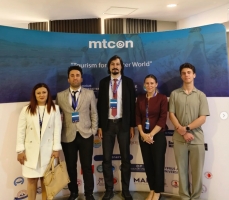
As the Alanya University Tourism Management Department, we proudly took our place at the international MTCON '26 (Managing Tourism Across Continents) conference in Antalya! Throughout the even...
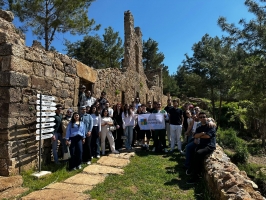
As part of Tourism Week activities, we visited Syedra Ancient City together with our students as the Alanya University Tourism Management Undergraduate Program and Tourism and Hotel Management Assoc...
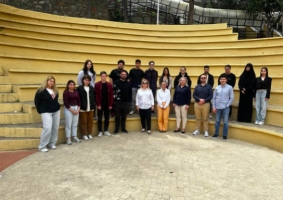
Today, our students in the Tourism Management and Business Administration departments had a special guest lecture from Erasmus+ visiting scholars Dr. Anna Korzeniewska and Kinga Wierzchowska. The f...
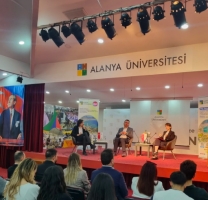
As part of our Tourism Week celebrations, we successfully organized the panel titled “Current Tourism Issues and Solutions” at our university, with strong participation and great interest....
There are no event available.
See All